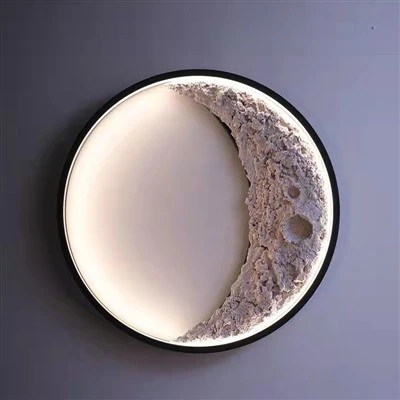
For a long time, people have not used light-emitting diodes for lighting mainly because light-emitting diodes can only emit red or yellow light. To obtain white light, it is necessary to manufacture light-emitting diodes that can emit blue light. In this way, when red, yellow, and blue light are "mixed", white light is produced. This difficult problem that troubles people has finally been solved. Scientists have discovered a new type of semiconductor material - gallium nitride, which can emit blue light after appropriate processing. After solving the problem of emitting blue light, there is hope for the problem of emitting white light. Colin Humphrys from the Materials Department of the University of Cambridge in the UK stated that they have developed a light-emitting diode light bulb that can emit white light in their experiments. This type of light bulb emits light that is very close to sunlight and has good application prospects. He said that light-emitting diode bulbs are made of semiconductors, so this type of light emitting device can be made very small, only a few millimeters, and installed on walls or ceilings. If the light is not turned on, their presence is almost imperceptible, which eliminates the trouble of ordinary incandescent lamps needing lampshades to prevent light from piercing the eyes. In addition, this type of light bulb has a long lifespan and requires almost no replacement after installation. In the future, people may forget what it means to replace a light bulb. He is calling on the UK government to increase investment to ensure that the UK can lead in this technology field. In addition to durability, this type of light bulb also has great potential in energy conservation. According to calculations, if half of the light bulbs in the United States use light-emitting diode bulbs, 24 power plants could be shut down, saving billions of dollars and significantly reducing carbon dioxide emissions. That's why the United States has planned to use LED bulbs for all traffic lights by 2006, saving $750 per intersection per year. Although this type of light bulb has many benefits, there are still two major obstacles to truly entering ordinary households. One reason is that the price is too high, with each bulb costing £ 30, while ordinary incandescent bulbs only cost 35 pence, the difference is too large. Secondly, it is still difficult to produce white light bulbs suitable for household use.